 Chair Yoga Teacher Certification in Canada: Training Requirements, Credentials & How to Register (2026 Guide)
Chair yoga is one of the fastest-growing ways to bring yoga to people who cannot or prefer not to practise on the floor. Community centres, retirement residences, hospitals, workplaces, and online classes all need skilled teachers. If you want to join them, you will quickly ask one question: what do I need to do to teach chair yoga in Canada?
This guide, Chair Yoga Teacher Certification in Canada: Training Requirements, Credentials & How to Register (2026 Guide), answers that question in plain language. You will learn what the law requires, what a strong training program covers, which credentials carry weight, and how to register with the main yoga bodies that Canadian teachers use. You will also find practical advice on insurance, first aid, and taxes.
One point matters from the start. Canada does not license yoga teachers. No federal or provincial government exam exists. That freedom brings responsibility. Your training, your credentials, and your professional habits are what make students and employers trust you. The sections below show you how to build that trust step by step.
What Chair Yoga Is and Who It Serves
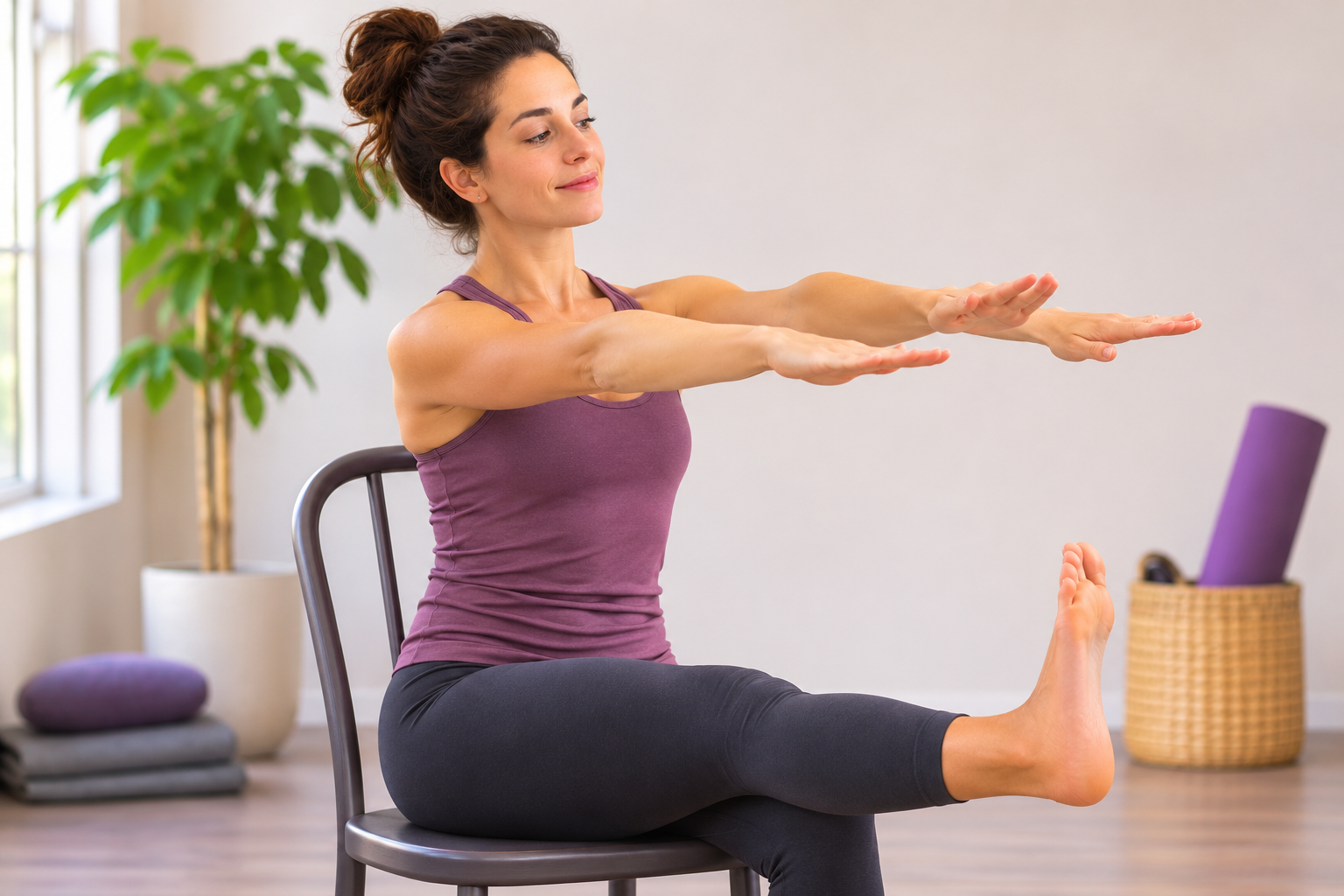
Chair yoga adapts traditional yoga so that a student can practise while seated or while standing with a chair for support. The chair acts as a prop. It offers stability, shortens the distance to the floor, and lets more people take part safely.
A chair yoga class usually includes gentle spinal movement, shoulder and hip mobility, breath work, seated and supported standing poses, and relaxation. Teachers adjust each movement to the group in front of them. Nobody is expected to bend, balance, or reach beyond a comfortable range.
The students vary widely. Many are older adults who want to stay mobile and independent. Others live with arthritis, chronic pain, or reduced strength. Some recover from surgery or illness. Office workers use chair yoga to ease stiff necks and tight hips during the day. Some students use wheelchairs. Others simply feel more at ease starting yoga in a chair.
This variety shapes what you must learn. A chair yoga teacher needs more than a list of seated poses. You need to read bodies, adapt movement, speak clearly, and manage risk. You also need to know the limits of your role. Yoga teachers support wellness. They do not diagnose, treat, or cure medical conditions.
Canada’s population is aging, and public health agencies encourage regular movement for older adults. The Canadian 24-Hour Movement Guidelines for adults aged 65 and older recommend aerobic activity, muscle-strengthening activity, and balance-focused activity each week. You can read them at the Canadian Society for Exercise Physiology guidelines page. Chair yoga does not replace all of that activity. It does offer an accessible entry point, and that is why demand for trained teachers keeps rising.
Is Certification Required to Teach Chair Yoga in Canada?
No law requires you to hold a certificate to teach yoga in Canada. The profession is self-regulated. Provinces do not license yoga teachers the way they license physiotherapists, nurses, or registered massage therapists.
That does not mean certification is optional in practice. Most employers expect it. Community centres, long-term care homes, municipal recreation departments, and insurance providers often ask for proof of training. Many also ask for current CPR and first aid. A certificate tells them you studied anatomy, teaching methods, and safety.
Certification also protects your students. A person with arthritis, high blood pressure, or limited balance needs a teacher who knows how to modify a movement. Proper training teaches you to do that. It also teaches you when to say, “Please check with your health provider first.”
Another legal point deserves attention. Several health professions in Canada have protected titles and defined scopes of practice. You should not call yourself a physiotherapist, occupational therapist, or any other regulated professional unless you hold that licence. You should also avoid promising medical results. Say “gentle movement to support mobility” rather than “this will cure your back pain.” Clear, honest language keeps you within your role and builds trust.
If you are new to the field, think of certification as a professional standard rather than a legal gate. You choose it because it improves your teaching, opens doors to work, and reassures the people you serve.
 Training Requirements: What a Strong Program Should Include
Because Canada sets no government standard, you must judge training quality yourself. Look for programs that cover the following areas in real depth.
Anatomy and physiology. You should understand joints, muscles, the spine, and the breathing system. A chair yoga teacher also needs to understand common age-related changes, such as reduced bone density, joint stiffness, and slower balance reactions.
Teaching methodology. Good programs teach you how to sequence a class, cue clearly, demonstrate, and observe your students. You practise teaching before real people and receive feedback.
Adaptations and modifications. This is the heart of chair yoga. You learn how to adjust a movement for limited range, pain, fatigue, or low vision. You also learn to offer options without singling anyone out.
Safety and contraindications. You study when a movement may not suit a student. Examples include recent surgery, uncontrolled blood pressure, dizziness, and osteoporosis. You also learn how to screen new students and when to refer them to a health professional.
Yoga philosophy, ethics, and history. Teachers need context for what they share. Ethics training covers consent, boundaries, confidentiality, and respectful touch. Many programs teach hands-off cueing, which suits chair classes well.
Breathwork and relaxation. These practices are central to chair yoga. You learn simple, safe breathing techniques and guided relaxation.
Practicum. A reputable program includes supervised teaching hours. You cannot learn to teach by reading alone.
Program length varies. Short chair yoga courses may run 10 to 30 hours. Longer foundational programs run 200 hours. The two serve different purposes, and the next section explains how they fit together.
Chair Yoga Specialty Training vs. a 200-Hour Foundation
Many new teachers ask whether they can skip general yoga training and go straight to chair yoga. You can, but you should understand the trade-off.
A chair yoga specialty course teaches you how to adapt yoga for seated practice. It is usually shorter and more affordable. It works well for people who already teach yoga, fitness, or movement and want to add chair classes.
A 200-hour yoga teacher training gives you the full foundation. You study anatomy, philosophy, technique, and teaching skills in depth. That broader base makes you a stronger and more flexible teacher. It also makes you eligible for the most widely recognized yoga credential.
Here is the important detail. Yoga Alliance does not offer a stand-alone chair yoga credential. Its registered teacher designations rest on completed yoga teacher training at a registered school. Chair yoga training can still count as continuing education, and you can list it on your resume. But the registration itself depends on your foundational training.
So you have two sensible paths:
- Foundation first. Complete a 200-hour training, register, and then add a chair yoga specialty course.
- Specialty first. Take a chair yoga course to start teaching sooner, then complete a 200-hour training later.
If you want the widest set of job options, choose the first path. If you already hold a strong background in teaching or health, the second path may suit you. If you are exploring the foundation route, review our RYT 200 standards to see what a complete 200-hour program involves.
Understanding Yoga Credentials: RYT, E-RYT, and YACEP
Yoga credentials can confuse new teachers. The letters look similar, but each one means something different.
RYT stands for Registered Yoga Teacher. The number shows the training hours. An RYT 200 has completed a 200-hour training with a registered school. An RYT 500 has completed 500 hours of training, either in one program or through a 200-hour and a 300-hour program.
E-RYT stands for Experienced Registered Yoga Teacher. It requires registered training plus a set amount of teaching experience over several years. Experienced teachers often lead trainings and mentor others.
YACEP stands for Yoga Alliance Continuing Education Provider. Teachers and schools use this status to offer approved continuing education. If you take a chair yoga workshop from a YACEP, it may count toward your ongoing education requirements.
RYS stands for Registered Yoga School. A school earns this status when its program meets the registry’s standards.
One more point helps you read marketing claims accurately. Yoga Alliance states that it registers teachers and schools. It does not certify them. A school certifies its own graduates. The registry then recognizes those graduates if the school and the training meet its standards. This difference sounds small, but it explains why you will see both “certified” and “registered” in this field.
Registration is voluntary. It also requires renewal. Registered teachers pay an annual fee and complete continuing education over time. Check each organization’s current rules before you apply, because requirements and fees can change.
Your Registration Options in Canada: Three Paths Compared
Canadian teachers can choose from several registries. Three options stand out for most chair yoga teachers. Each has a different focus, so compare them before you decide.
Yoga Alliance (USA)
Yoga Alliance is the largest and best-known yoga registry. It is based in the United States, and teachers around the world register with it, including many in Canada. You do not need US residency.
To earn the RYT 200 designation, you must complete a 200-hour training with a school registered with Yoga Alliance. You then apply online, pay the registration fee, and renew each year. The brand carries strong recognition with studios, gyms, and employers.
The main benefit is recognition. The main limit is that your training must come from a registered school, and the registry offers no chair yoga designation of its own.
Canadian Yoga Alliance
The Canadian Yoga Alliance is a Canada-based registry for yoga teachers and schools. It suits teachers who want a registry rooted in the Canadian yoga community. Its standards and designations differ from those of the US registry, so read its current requirements on its website before you apply.
Teachers often choose this option when they want a Canadian organization to represent them. It may also appeal to schools that want a national presence. Confirm what employers in your region recognize, since studio preferences vary from city to city.
Yoga Alliance International
Yoga Alliance International offers international registration for teachers who complete qualifying training. It welcomes Canadian teachers and provides RYT-level designations, including RYT 200. You can review the full requirements on our RYT 200 standards page and see how to apply through our teacher registration page.
How to Compare Them
Ask four questions before you choose:
- Recognition. Which name do employers in my area ask for?
- Standards. Does my training meet the registry’s published requirements?
- Cost. What are the application and annual renewal fees today?
- Support. Does the organization help with continuing education and verification?
You can also register with more than one body if your training qualifies. Many teachers do. Read each registry’s terms first, and keep your records organized.
How to Register: A Step-by-Step Process
The exact steps differ slightly by registry. The general path looks like this.
Step 1: Choose a qualifying training. Confirm that your school meets the standards of the registry you want. Do this before you pay for the course. Ask the school directly, and check the registry’s public directory when one exists.
Step 2: Complete the full program. Attend all required hours. Finish any assignments, teaching practicums, and assessments. Keep your certificate.
Step 3: Gather your documents. You will usually need your training certificate, your graduation date, and your school’s details. Some registries also ask for proof of identity.
Step 4: Create your account and apply. Most registrations happen online. You enter your information, select your designation, and submit your training details. The school may need to confirm your completion.
Step 5: Pay the fees. Expect an initial application fee and an annual renewal fee. Fees change, so check the current amounts on the registry’s website.
Step 6: Receive your designation. Once approved, you can use the registered title in your marketing. Use it accurately. Write “RYT 200” only if you hold it.
Step 7: Maintain your status. Renew on time. Log continuing education. Add new training, such as a chair yoga specialty course, as you grow.
If you studied with us, our graduate registration guide walks you through the process in detail.
 Choosing the Right Chair Yoga Training Program
A good program makes you a better teacher. A weak one wastes your money. Use these checks before you enrol.
Verify the school’s standing. If a school claims registry approval, confirm it with the registry. Do not rely on a logo alone.
Review the curriculum. Ask for a full outline. Look for anatomy, adaptations, safety, and supervised teaching. Be cautious if the program promises certification after a weekend with no practice teaching.
Check the instructors. Read their bios. Look for years of teaching experience and, ideally, experience with older adults or people with limited mobility. Teachers with a background in kinesiology, nursing, or rehabilitation bring valuable perspective, though they are not required.
Ask about format. Online, in-person, and hybrid programs all exist. Online training offers flexibility. In-person training gives you hands-on feedback. Many people prefer a hybrid format. Confirm that the format meets the registry’s rules.
Understand the total cost. Ask about tuition, materials, registration fees, and any extra costs. Compare programs on value, not only on price.
Read honest reviews. Look for graduates who now teach. Ask them how prepared they felt.
Look for ongoing support. Mentorship, community, and continuing education help you after graduation. Our yoga teacher training overview explains what support looks like at our school.
Take your time. A thoughtful choice pays off for years.
First Aid, Insurance, and Business Basics
Certification is only one part of teaching professionally. Three practical areas deserve your attention before you lead your first class.
CPR and first aid. Your students may include older adults and people with health conditions. Emergencies, though uncommon, can happen. Current CPR and first aid training prepares you to respond calmly. Many employers require it. Organizations such as the Canadian Red Cross offer courses across the country. Ask your employer which level they require.
Liability insurance. Professional liability insurance protects you if a student claims an injury. Many studios and community venues require proof of coverage. Choose a policy that covers yoga instruction, including chair classes. Registered teachers often have access to group insurance rates, so ask your registry about options.
Taxes and business registration. If you teach as a self-employed instructor, you earn business income. Canadian small businesses must register for GST/HST once their taxable revenue passes the small supplier threshold of $30,000 over four consecutive calendar quarters. The Canada Revenue Agency explains the rules, and an accountant can help you apply them to your situation. Keep records of income, expenses, and receipts from day one.
Client records and privacy. If you collect health information from students, store it securely and share it only with permission. Provincial privacy rules may apply, so learn what covers your work.
Scope of practice. Teach movement, breath, and relaxation. Do not diagnose or promise cures. When a student describes symptoms beyond your training, suggest they speak with their doctor or physiotherapist.
These steps may feel administrative, but they protect you and your students. They also show employers that you take your role seriously.
Building a Career as a Chair Yoga Teacher
Once you are trained and registered, you can build a steady practice in several ways.
Community and recreation centres. Municipal programs often hire instructors for seniors’ classes. These roles may pay modestly but offer reliable schedules.
Retirement and long-term care homes. Residences look for gentle movement leaders. Some hire staff teachers. Others book independent instructors.
Workplaces. Employers increasingly offer wellness sessions. Short desk-based chair yoga classes suit offices and remote teams.
Online classes. Video classes let you reach students across provinces. They work well for people who struggle to travel.
Private sessions. One-on-one lessons allow you to tailor each class closely. They also let you build strong relationships.
Workshops and retreats. Experienced teachers can run themed workshops, such as chair yoga for better sleep or for desk workers.
Start small. Teach a free or low-cost class to practise. Ask for feedback. Collect testimonials with permission. Build a simple website that states your training, credentials, and the type of student you serve. Be honest in everything you publish. Clear, accurate descriptions build trust, and trust brings referrals.
Keep learning. Take workshops on topics such as arthritis-friendly movement, balance, breath, or trauma-informed teaching. Each course deepens your skills and counts toward your registry’s continuing education requirements.
Frequently Asked Questions
Can I teach chair yoga without a certificate in Canada? Yes, the law allows it. Most employers and insurers expect formal training, though.
How long does it take to become a chair yoga teacher? A specialty course can take a few weekends. A 200-hour training often takes several weeks to several months, depending on the format.
Does Yoga Alliance offer a chair yoga credential? No. It offers designations based on foundational and advanced yoga training. Chair yoga courses can serve as continuing education.
Can I train online? Many programs offer online or hybrid formats. Check that the format meets your chosen registry’s rules.
Do I need a health background? No. A health background helps, but good training can prepare you to teach safely.
Which registry should I pick? Choose the one that matches your training and your local job market. Some teachers register with more than one.
Conclusion: Your Path Forward
You now have a clear map for Chair Yoga Teacher Certification in Canada: Training Requirements, Credentials & How to Register (2026 Guide). The main takeaway is simple. Canada does not require a licence to teach chair yoga, but strong training and recognized registration set you apart. Build a solid foundation, learn to adapt yoga for seated practice, and register with a body that employers know and trust.
Begin with a program that covers anatomy, safety, teaching skills, and supervised practice. Compare Yoga Alliance, the Canadian Yoga Alliance, and US Yoga Alliance International on recognition, standards, cost, and support. Add first aid, insurance, and sound business habits. Then keep learning, because the best chair yoga teachers never stop refining their craft.
If you are ready to register, review our RYT 200 standards and take your next step toward becoming a registered teacher.