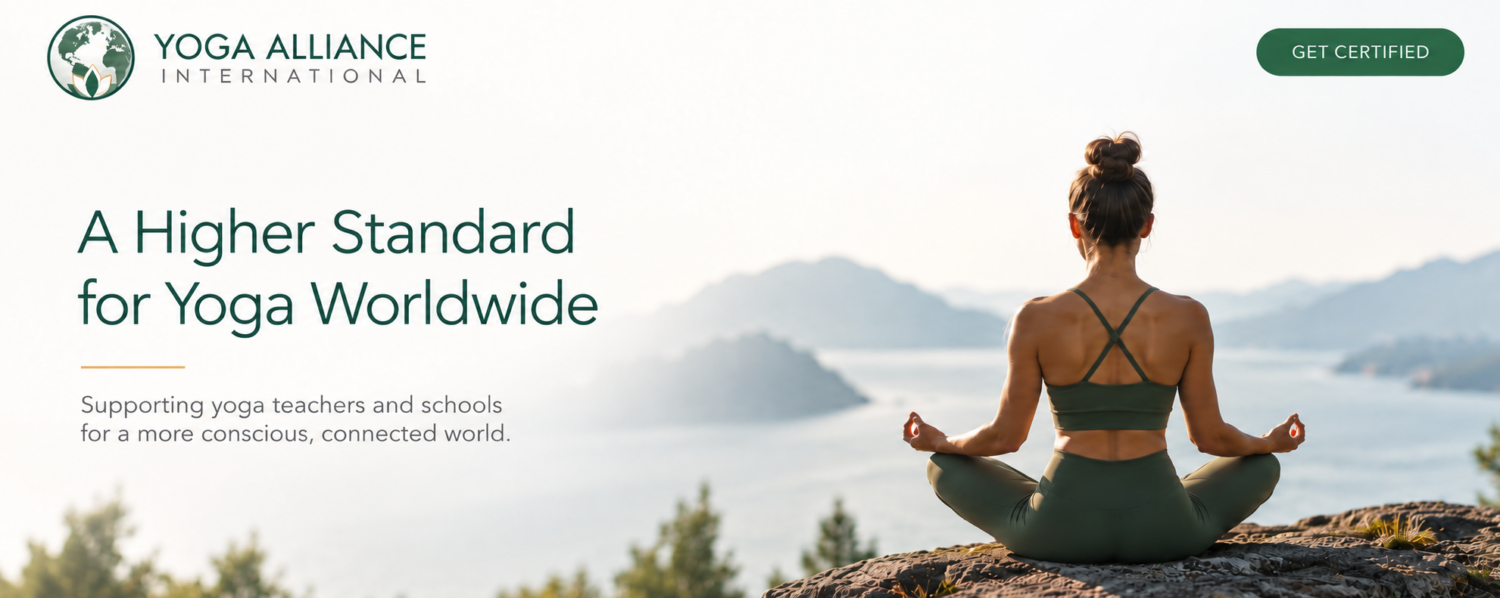
 What Does It Mean to Be a Registered Yoga Teacher (RYT)? A Complete Guide for 2026

You see the letters everywhere. They appear on studio websites, retreat brochures, and Instagram bios. RYT-200. RYT-500. E-RYT. For aspiring yoga teachers and curious students alike, these acronyms can feel like an insider code. So what does it actually mean to be a Registered Yoga Teacher (RYT)? In this comprehensive guide, What Does It Mean to Be a Registered Yoga Teacher (RYT)?, we will break down the credential in plain language. We will explore what the title represents, who grants it, what it takes to earn one, and why it still matters in a rapidly evolving global yoga industry.
The short answer is this. An RYT is a yoga teacher who has completed training at a school registered with Yoga Alliance, the largest nonprofit registry of yoga teachers and schools in the world. The credential is voluntary, not a government license. Yet for many studios, retreats, and online platforms, it remains the most widely recognized professional signal of training quality and ethical accountability. Let’s unpack what that really means.
Understanding the RYT Credential: More Than a Title
The RYT designation is essentially a professional registry mark. It tells the world that you completed a yoga teacher training at a school that meets the curricular standards set by Yoga Alliance. Yoga Alliance itself does not run trainings. Instead, it sets the educational framework and registers schools that meet those standards. Those schools are known as Registered Yoga Schools, or RYS. When a graduate of an RYS chooses to apply, pay annual dues, and agree to a code of ethics, they become a Registered Yoga Teacher.
This distinction matters. Yoga is not a regulated profession in most countries. Unlike massage therapists, nurses, or physical therapists, yoga teachers do not need a state-issued license to teach. Anyone can call themselves a yoga teacher. The RYT credential fills that regulatory gap by offering a voluntary but well-recognized standard. It signals that you have done the hours, studied the curriculum, and committed publicly to ethical conduct.
For students, the credential offers a layer of trust. For studios, it simplifies hiring decisions and supports liability insurance requirements. For teachers themselves, it provides a professional identity, a public directory listing, and access to a global community of practitioners. The credential does not make someone a great teacher on its own. Teaching skill grows with experience, mentorship, and personal practice. But it does establish a baseline of training that the broader yoga industry recognizes.
 The History and Role of Yoga Alliance

To understand the RYT, you need to understand the organization behind it. Yoga Alliance was founded in 1999 as a response to a fragmented yoga industry. At the time, training programs varied wildly in length, content, and quality. There was no shared vocabulary, no shared standard, and no easy way for students or studios to verify a teacher’s background.
Yoga Alliance changed that by creating minimum curricular standards for teacher training and a public registry where qualified teachers and schools could list their credentials. Over the next two decades, the registry grew into the largest of its kind worldwide. Today it serves tens of thousands of teachers and schools across more than 100 countries.
It is important to understand what Yoga Alliance is and is not. It is a nonprofit standards-setting body and registry. It is not a government agency, a union, or an accrediting body in the traditional academic sense. It does not issue licenses. It cannot, on its own, prevent someone from teaching yoga. What it does is establish a shared professional benchmark and hold its members accountable to a published code of ethics.
In recent years, Yoga Alliance has tightened its standards considerably. The organization rolled out a new Common Core Curriculum for 200-hour programs, introduced an Ethical Commitment that all members must sign, and required schools to undergo more rigorous review. The aim is to raise quality across the board and make the credential more meaningful in a market crowded with weekend certificates and questionable online programs.
RYT 200: The Foundation Credential
The RYT 200 is the entry point. Almost every professional yoga teacher begins here. To earn it, you must complete a 200-hour teacher training at a school registered as an RYS 200. According to Yoga Alliance’s published standards, multiple shorter trainings cannot be combined to meet the 200-hour minimum. The hours must come from a single, complete RYS-registered program.
The curriculum covers five core educational categories. These are techniques, training, and practice; teaching methodology; anatomy and physiology; yoga philosophy, lifestyle, and ethics; and a practicum where trainees actually teach. A 200-hour program is meant to give you a strong working foundation across all of these areas, not specialized expertise in any one of them.
What does a strong 200-hour training look like in 2026? It goes far beyond memorizing pose names. Quality programs now include functional anatomy that explains how different bodies move, trauma-aware teaching that helps create safer emotional spaces, and grounding in breath, meditation, and nervous system regulation. You will learn to sequence a class, cue students clearly, observe and adjust posture, and adapt practices for diverse populations.
There are no teaching requirements before you can apply for the RYT 200. Once you complete your training, you can apply directly to Yoga Alliance with your certificate. Your certificate must include specific information, including the registered name of the school, the legal name of the trainee, the program completion date, the track designation, and a handwritten signature from an authorized signatory who is not the registrant. Self-signed certificates are not accepted. Costs for the training itself vary widely, typically running between $1,500 and $5,000 or more, depending on location, format, and program length.
 RYT 300 and RYT 500: Going Deeper

After teaching for some time, many instructors choose to continue their education. This is where the RYT 300 and RYT 500 designations come in. They represent advanced training beyond the foundational 200 hours.
The RYT 300 is an additional 300-hour training that builds on the RYT 200. It is meant for teachers who already have a foundation and want to go deeper into philosophy, advanced teaching methodology, sequencing, adjustments, and personal practice. You cannot take an RYT 300 program without first completing an RYS 200 training.
The RYT 500 is the advanced credential. It represents 500 total training hours. There are two paths to earn it. You can complete an RYT 200 program followed by an RYT 300, for a combined total of 500 hours. Or you can complete a single integrated 500-hour program at an RYS 500. Either path qualifies you for the RYT 500 designation, provided you meet all the documentation requirements.
In 2026, many high-end studios, wellness resorts, and international retreat centers prefer or require RYT 500 teachers for lead roles. The credential signals significant investment in continuing education and a deeper command of yoga’s broader knowledge base, including specialty areas like yoga therapy, prenatal yoga, trauma-informed practice, and advanced philosophy. It does not replace experience, but it does open doors that an RYT 200 alone may not.
E-RYT and YACEP: The Experienced Teacher Designations
The “E” in E-RYT stands for “experienced.” It is awarded to teachers who have not only completed training but also accumulated substantial teaching hours after registering. According to Yoga Alliance, an E-RYT 200 must have taught a minimum of 1,000 hours of yoga classes and have at least two years of teaching experience since earning the RYT 200. An E-RYT 500 requires a minimum of 2,000 teaching hours and at least four years of teaching experience.
The E-RYT designation carries real professional weight. It is one of the few credentials that allows a yoga teacher to lead teacher training programs and mentor other instructors. If you want to eventually run your own 200-hour training, you generally need to either become an E-RYT 500 yourself or work under one as a lead trainer.
YACEP, which stands for Yoga Alliance Continuing Education Provider, is a separate designation. It allows experienced teachers to offer workshops, courses, and trainings that count toward other teachers’ continuing education hours. YACEP is particularly valuable for teachers who want to build authority in a specialty area, like yin yoga, restorative practice, or yoga philosophy, without committing to running a full teacher training program.
These advanced credentials matter most for teachers who want to train other teachers, lead specialized workshops, or build a long-term career as a recognized educator within the yoga industry. For someone who simply wants to teach group classes at a studio, the RYT 200 is enough.
 Continuing Education: Keeping Your Credential Active
Earning the RYT is one thing. Maintaining it is another. Yoga Alliance requires all RYTs to renew their membership annually with dues and to complete continuing education on a three-year cycle. According to Yoga Alliance’s published continuing education requirements, RYTs and E-RYTs must complete 75 hours of continuing education within every three-year cycle, starting from their initial registration date.
Those 75 hours break down into two parts. The first is 45 hours of actual teaching. The second is 30 hours of yoga-related training in one of the Yoga Alliance educational categories. The teaching hours are easy for active teachers to accumulate. The 30 hours of training is where most teachers focus their attention.
Yoga Alliance no longer requires that a specific portion of these training hours be in person. As of recent policy updates, the contact hour requirement has been removed, meaning workshops can be fully online, fully in person, or any combination, as long as they come from a qualified provider. Qualified providers include YACEP-credentialed teachers, registered schools, or instructors with documented expertise in a relevant subject area.
A few important rules apply. Hours completed before your initial registration date do not count. Extra hours do not roll over into the next renewal period. Teaching yoga itself does not count toward the 30 training hours, since those hours are specifically meant for your own continued learning. If you do not complete the requirement on time, your credential lapses, you are removed from the public directory, and you must complete the missing hours, pay a reinstatement fee, and undergo an audit to be restored.
The continuing education requirement reflects something important about the profession. Yoga teaching is not a static skill. Our understanding of biomechanics, trauma-informed care, nervous system science, and inclusive practice continues to evolve. Continuing education ensures teachers stay current rather than relying solely on what they learned in their initial 200 hours.
The Ethical Commitment: A Defining Feature
One of the most significant developments in recent years is the Yoga Alliance Ethical Commitment. Every RYT must agree to it as part of registration and renewal. It is not optional. The commitment has three parts: a Code of Conduct, a Scope of Practice, and a responsibility to Equity in Yoga.
The Code of Conduct addresses how teachers behave in their professional roles. It covers active inclusion, respect for student-teacher relationships, consent-based touch, honest communication, anti-harassment, and anti-discrimination. Teachers must abide by all applicable laws in the jurisdictions where they teach.
The Scope of Practice is newer and arguably one of the most important documents Yoga Alliance has ever published. It clearly defines what a yoga teacher can and cannot ethically do. The core principle is that members should not present themselves as having expertise in disciplines beyond yoga, such as medicine, mental health treatment, or physical therapy, unless they hold the appropriate additional credentials. They cannot use their Yoga Alliance credentials to imply competency in fields outside the scope of yoga teaching.
This boundary protects students and the profession itself. A yoga teacher might support someone managing anxiety through breathwork and movement. They should not diagnose anxiety disorders or position themselves as a substitute for licensed therapy. A teacher might guide a student around a sore back. They are not a chiropractor and should refer to qualified professionals when issues fall outside their training.
The third pillar, Equity in Yoga, reflects an ongoing effort to make yoga spaces more inclusive, accessible, and welcoming to people of all backgrounds, body types, abilities, races, gender identities, and economic circumstances. It is woven through the Code of Conduct and Scope of Practice in concrete ways, including required attention to active inclusion and informed consent.
How to Become an RYT: The Step-by-Step Process
If becoming a Registered Yoga Teacher sounds like the right path for you, the process is straightforward, though it requires real time and financial commitment.
First, choose a Registered Yoga School. Verify that the school is currently active on the Yoga Alliance directory and that its program is listed as RYS 200 or whichever level you are seeking. A school’s status can change, and trainees are typically not eligible to register if their school’s RYS registration is suspended or revoked as of their completion date.
Second, complete the full program. You must complete all required hours, assignments, and practicum requirements. Multiple programs cannot be combined to meet the 200-hour requirement.
Third, gather your documentation. Your certificate must meet specific requirements, including the school’s registered name, your legal name, the program completion date, the track designation, and a handwritten signature from an authorized signatory. Fraudulent certificates can result in being permanently barred from future registration.
Fourth, submit your application to Yoga Alliance through your online account. You will be asked to complete a review of your training as part of the Social Credentialing system, which provides public feedback to help future students choose programs wisely. You will also formally agree to the Ethical Commitment.
Fifth, pay your initial registration fee and your first year of dues. Once approved, you will receive your RYT credential, appear on the public Yoga Alliance directory, and can begin using your designation professionally.
Finally, plan ahead for renewal. Mark your three-year continuing education deadline on your calendar from day one. Tracking your teaching hours and training hours as you accumulate them is far easier than scrambling to reconstruct records before a deadline.
 Is the RYT Credential Worth It?
This is the question many aspiring teachers wrestle with. The honest answer depends on your goals.
If you want to teach at established yoga studios, gyms, or wellness centers, the RYT credential is often expected. Many studios require it for liability insurance purposes and as a baseline hiring standard. If you want to teach internationally at retreats, hotels, or resorts, the RYT is widely recognized and often required. If you want to build credibility quickly with new students who may not know you personally, the credential offers a recognizable trust signal.
If you want to teach exclusively online and build your own personal brand, the RYT is optional. Your teaching quality, content, reviews, and authentic voice will matter more than letters after your name in that context. If your goal is to teach yoga in clinical or medical settings, like hospitals or rehabilitation facilities, the RYT may not be sufficient on its own. You may need additional certifications like a yoga therapy credential from a separate organization.
There are also legitimate critiques of the credentialing system. Some experienced teachers, including respected senior instructors who trained long before Yoga Alliance existed, choose not to register. Some traditional lineages have philosophical objections to the standardized framework. The credential is not a guarantee of teaching skill, nor is its absence proof of inadequacy. It is one signal among many.
That said, for most new teachers entering the field in 2026, the RYT credential offers tangible benefits. It provides a clear pathway, access to liability insurance options, professional community, public directory visibility, and a structured framework for ongoing learning. Liability insurance access alone often justifies the modest annual dues for teachers who plan to teach actively.
Conclusion: The Real Meaning of the RYT
So, what does it mean to be a Registered Yoga Teacher (RYT)? It means you completed at least 200 hours of training at a school that meets Yoga Alliance’s curricular standards. It means you agreed to a published code of professional ethics and a defined scope of practice. It means you committed to ongoing learning through continuing education. It means you are listed in the world’s largest public registry of yoga teachers.
What it does not mean is that you are automatically a great teacher, or that teachers without the credential are not worthwhile. Great teaching is built through years of practice, mentorship, self-study, and genuine care for students. The RYT is a starting point and a professional anchor, not a finish line.
The main takeaway is this. The RYT credential is a meaningful but voluntary professional standard. For aspiring yoga teachers who want studio jobs, international opportunities, professional liability access, and a recognized framework for growth, registering with Yoga Alliance is usually a smart investment. For students choosing a teacher, the credential is a useful starting signal of training quality and ethical accountability, but it should be weighed alongside teaching style, experience, and personal fit.
Yoga is a 5,000-year-old practice. The RYT credential is a recent invention in that long history. But in today’s global yoga industry, it serves an important function. It establishes a shared language, raises baseline quality, and holds teachers accountable to a published ethical standard. Whether you are exploring teacher training for the first time or trying to decide if it is time to upgrade to your RYT 500, understanding what the credential really represents is the first step toward making the choice that fits your path.